O trem caipira


O TREM CAIPIRA
The Country Train
 A musical film after a theme by the Brazilian composer Heitor Villa-Lobos. Not a word is spoken in the film. A composition of only pictures, movements and sounds attempts to reveal the origins of Brazilian music. They say, that Brazilian Music has had no childhood. It was born an adult. This film presents the New Brazilian Music within its own environment, an environment still not fully explored. - The Brazilian composer who isolates sounds from noises, forming them into rhythm and melody, is doing no more than reflecting the natural vibrations that come from his soul, the Brazilian soul.
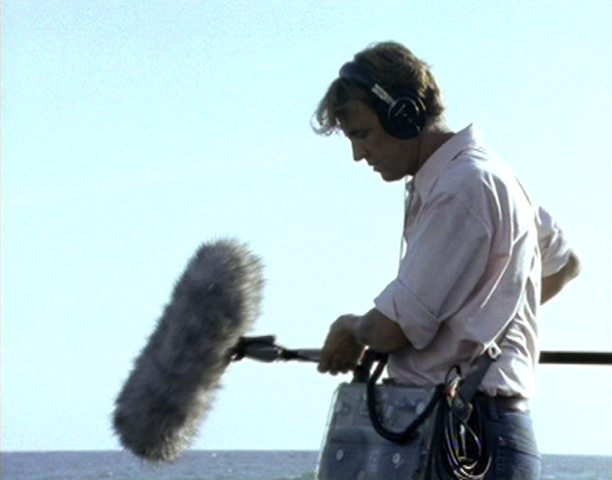
"A green guitar runs through the film by Georg Brintrup and Fabio de Araújo as a recurring motif. It can swim, it can fly, constantly changes hands, and finally ends up in a sound engineer's recording booth in front of the microphone.
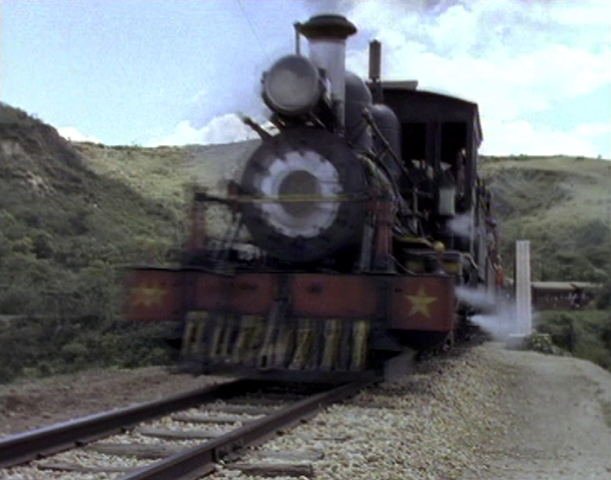
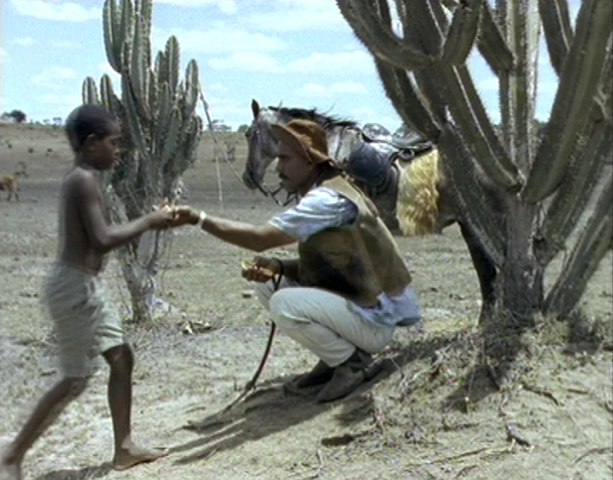
Alongside the guitar, a train is the second leitmotif of this film titled O TREM CAIPIRA – which translates roughly as "The Country Train" – a motif that also recurs throughout Brazilian music. Together, the guitar and the country train embark on a musical journey through Brazil's lesser-known towns and landscapes. Not a single word is spoken; only images and sounds, accompanied by little-known Brazilian music, reveal the character, way of life, and musical culture of the Brazilian people.
O TREM CAIPIRA presents the work of composers far less known outside Brazil than, for example, Heitor Villa-Lobos: Brasílio Itiberê da Cunha, the first composer to write "purely Brazilian" music, and modern composers such as Radamés Gnattali, Camargo Guarnieri, Egberto Gismonti, and Wagner Tiso, who carried on this tradition. O TREM CAIPIRA is an artful film that captivates not only through its unusual concept: both the choice of music and its visual appeal make it a television experience of a very special kind."
in: "Szene", 13 July 1994
"Experimental and ambitious: starting with the green guitar and the sound engineer who sets off to capture voices in Brazil, it all comes together into a contradictory overall impression that updates, in a rather mundane way, the composition's original tension between tradition and modernity."
R.B. in: "Frankfurter Rundschau", 20 July 1995
The film is available for 6 € (digital download / online access). After purchase you will get immediate access to the film.
BRAZIL, 60', 16mm, colour
Production: ARTE/ZDF/Brintrup